MAGNETIX
Browse through40 000 000 magnets in stock
Your online shop for all kinds of magnets

40 million
magnets in stock
magnets in stock
500 000+ delivered
orders
orders
18 years
experience
experience
Fast
delivery
delivery
Choose / Select
Most popular magnets

On Sale
TOP
in stock
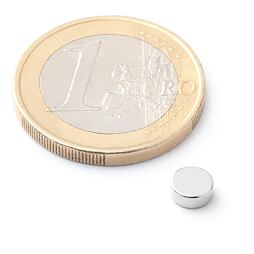
Neodymium disc magnet Ø 10 mm, h. 1 mm, strength 500 g
No products found KT-10-01-N
Disc magnet Ø 10 mm, height 1 mm, neodymium, N42, nickel-plated, force: approx. 500 g
0,08 € before VAT
0,10 €
Product details / Show results in
in stock
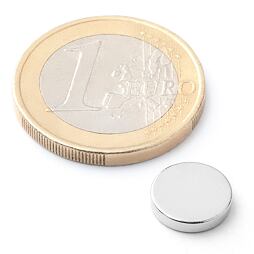
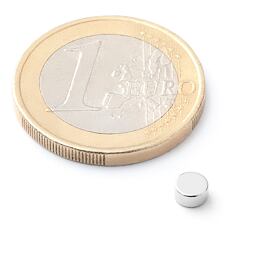
Neodymium disc magnet Ø 5 mm, h. 2 mm, strength 500 g
No products found KT-05-02-N
Disc magnet Ø 5 mm, height 2 mm, neodymium, N42, nickel-plated, strength: approx. 500 g
0,05 € before VAT
0,06 €
Product details / Show results in
Read on our blog
All articles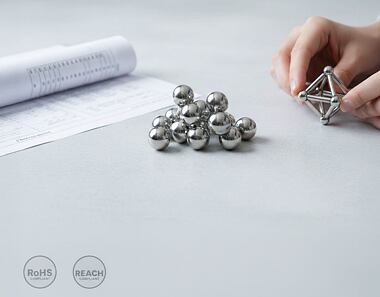
RoHS and REACH compliance: what it means for magnets
When choosing magnets, you are likely interested in their magnetic force, shape, dimensions, surface finish, or other parameters. If you work in industry, electronics manufacturing, or care about health and the environment, you might be familiar with the RoHS and REACH certification abbreviations. At UNIMAGNET, we take these standards seriously. Find out what RoHS and REACH Compliant means and why it should interest you.
Read more ›
Germanium – fair price buyback: sell us your non-ferrous metals
We purchase non-ferrous and precious metals. One of these is germanium (Ge). We provide germanium buying at fair prices, which are determined according to the current global value. If you have germanium, the purchase of this metal is available for companies, individuals, and households. The germanium metal buying process is simple and transparent; take a look.
Read more ›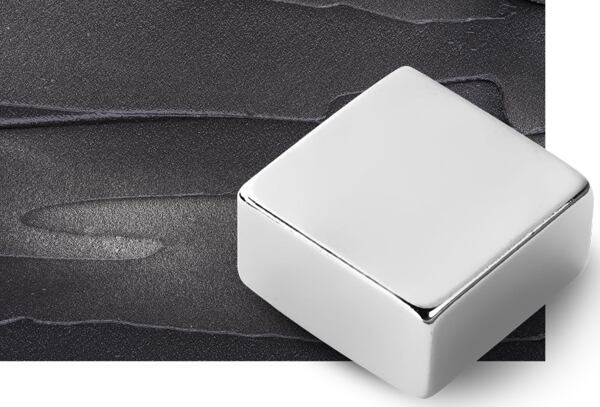
Neodymium magnets can even carry an elephant
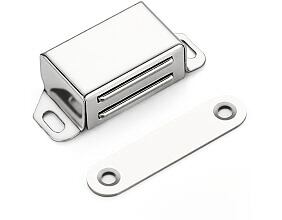
Do you need a strong magnet, magnetic knife rack, closures for doors or boxes, magnetic labels for your warehouse, magnetic paint, fridge magnets, or do you want to create your own custom magnets?
We can supply you with everything from mini magnets just a few millimeters in size to extra-powerful neodymium magnets for magnet fishing or industrial use with a magnetic force of thousands of kilograms. Affordably and fast – just as we have for thousands of customers before you. Can magnets really lift a proboscidean from Africa or India? Yes, our load lifting magnets can indeed lift an elephant.
Are you wondering which magnet is best for your project? Get in touch with us; we will help you with your selection. Also, check out our magnetic tips, advice, and ideas.
Do you need advice?
Contact us. We will help you choose.
Tel.: (+420) 777 330 004
E-mail: sales@unimagnet.cz
Frequently asked questions and answers
FAQ
What can magnets be attached to?
You can attach magnets of any type to ferromagnetic materials such as iron, nickel, cobalt, or iron-containing alloys like steel. Magnets also adhere to one another. They hold firmly on sheet metal and magnetic whiteboards, refrigerator doors, steel structures and profiles, car bodies, metal gutters, metal door frames, or steel cabinets.
Are magnets safe?
Magnets are generally safe when handled correctly, considering their magnetic strength and size. However, neodymium and other strong magnets do not belong in the hands of small children, as they may swallow them or pinch their fingers. Powerful magnets can cause injury even to adults; therefore, it is essential to follow proper handling procedures when separating or joining them.
Magnets can also be dangerous for individuals with pacemakers or other medical implants. Furthermore, they may cause malfunctions or damage to sensitive devices, storage media, electronics, and credit cards. Read our Safety tips for working with magnets.
How to safely separate and join magnets?
Weak magnets can be carefully separated and joined by hand. For added safety, we recommend wearing protective gloves. Stronger magnets should be separated by sliding them off each other over the edge of a table or by using a special separator tool. To join them safely, you can use a wooden wedge to control the movement.
Magnet brittleness – what to watch out for?
Although neodymium magnets look like metal, their structure is more similar to ceramics. They are extremely powerful but also brittle. If they strike a surface or another magnet, or if they are dropped on the floor, they can crack or chip. This can also happen if excessive pressure is applied during installation. For better durability, we recommend using magnetic mounts, assemblies (pot magnets) in a steel housing.
Can magnets be drilled or cut?
Under normal household or hobby conditions, magnets cannot be cut or drilled. Doing so carries a high risk of chipping, cracking, or damaging the protective surface coating. If you require a different magnet size, it is better to choose a different dimension or shape from our selection.
How to attach or glue magnets?
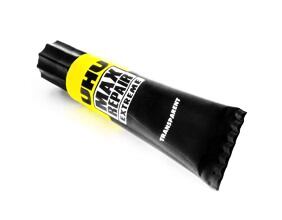
You can glue magnets using UHU MAX REPAIR universal adhesive or the special UHU plus endfest 300 two-component epoxy. We also offer other specialized adhesives designed specifically for magnets. Magnets with a hole (countersunk magnets) can be fastened with a screw, but please tighten them carefully.
How do magnetic mounts differ from regular magnets?
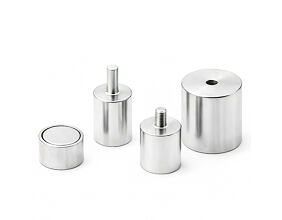
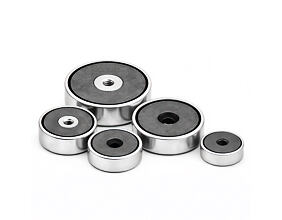
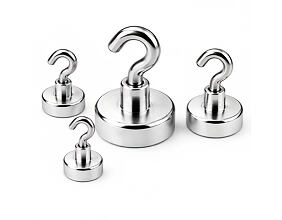
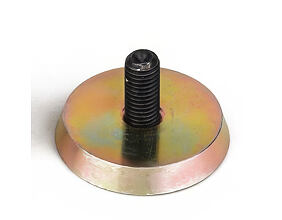
Magnetic mounts may look similar to classic neodymium magnets, including their finish—they are typically nickel-plated. However, they are encased in a durable steel housing that provides better protection against mechanical damage and slightly increases the magnetic force. Magnetic mounts are available with countersunk holes, internal or external threads, hooks, or with a protective rubber coating.
Can magnets be used outdoors? Are they waterproof?
Even though most magnets have a nickel or zinc coating, they are not—with the exception of ferrite magnets—intended for outdoor use. They can corrode in humid or wet environments. However, we offer rubber-coated and plastic-coated waterproof magnets, which are specifically designed for outdoor applications.
What do N38, N42, and other grades mean?
Designations such as N40, N42, N45M, and others represent the grade of the magnetic material – the amount of "magnetic energy" contained within the magnet and its maximum operating temperature. The letters (N, M, H, SH, UH, EH, or AH) indicate the maximum operating temperature, ranging from 80°C up to 240°C. The numerical value (e.g., 38, 42, 45) roughly corresponds to the magnet's maximum energy product (in MGOe). You can find detailed physical properties of neodymium magnets in our technical table.
What is the difference between Ferrite, Neodymium, AlNiCo, and SmCo magnets?
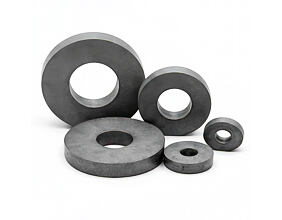
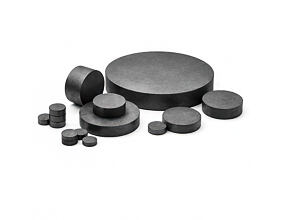
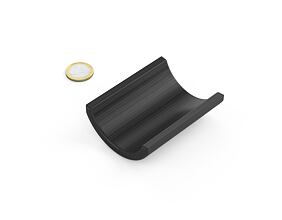
Over time, scientists have developed magnets from various materials with different magnetic strengths and properties. Among the oldest are Ferrite magnets, also known as ceramic magnets. They are made from strontium ferrites and are relatively weak, yet highly resistant to external influences even without a surface coating.
AlNiCo magnets can withstand high temperatures up to 525°C, as well as the effects of acids, solvents, and corrosion. Samarium-cobalt (SmCo) magnets are magnetically stronger and slightly more brittle, but more resistant to corrosion. The most powerful are Neodymium magnets, which can hold up to 1,000 times their own weight.
What is magnet strength?
Magnet strength refers to the pull force required to detach a magnet from a steel surface, or its attraction to an iron object or another magnet at a specific distance. For better clarity, we do not state this force in Newtons, but somewhat less precisely in grams or kilograms. It depends on the material the magnet is made of, as well as its shape, volume, aspect ratio, and combination with other materials, such as a protective housing.
Pull force vs. Shear force – what does it mean?
If you attach a hook magnet to the underside of a steel beam so that the hook points downward and you hang an object on it, the pull force will be, for example, 30 kg under optimal conditions – depending on the magnet size. However, if you attach the same hook magnet to a vertical surface, the holding power will drop to only 15–25% of that value. This is because, when placed on a vertical surface, shear force (also known as sliding force) also comes into play.
How to identify magnetic poles?
You can identify the poles of a magnet using a compass. The side of the magnetic needle marked "North" will point toward the south pole of the magnet. A simpler method is to use a mobile application designed for magnetic field detection. For example, the KJ Pole ID app is simple and reliable. There are also several other ways to determine a magnet's poles.
What is magnetic sheeting?
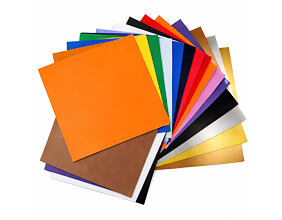
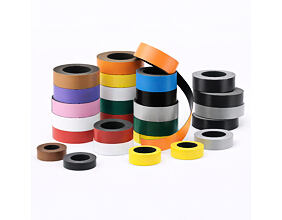
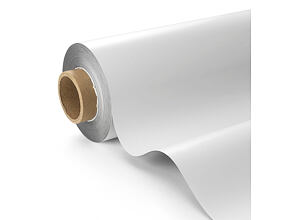
Magnetic sheeting (or foil) is a thin, flexible material containing magnetic particles that provide its magnetic properties. The magnetic layer is similar to that of ferrite magnets. These sheets come in various thicknesses, magnetic strengths, dimensions, and colors, and are available as magnetic tapes or sheets. We also offer self-adhesive magnetic sheeting.
Magnetic sheets are frequently used in advertising, for mounting graphics and photos, in educational materials, and for organizational purposes. Thanks to their flexibility and ease of use, they are a popular choice for various creative and commercial applications.
What is the difference between magnetic and ferrous sheeting?
Magnetic sheeting adheres well to metal surfaces made of iron, steel, or nickel, and functions similarly to other magnets. On the other hand, ferrous sheeting (also known as ferro-film) cannot be attached to a metal surface itself; instead, it serves as an excellent base for magnets, turning any surface into a magnetic board for office magnets. Self-adhesive ferrous sheets are also available for creating custom magnetic boards.
Magnetic boards and whiteboards – how to create one in no time?
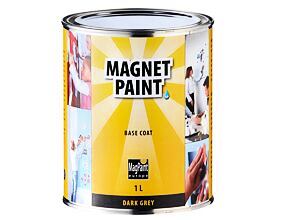
Magnetic paint contains microscopic metallic particles. After applying at least three coats of the paint and letting it dry, you can attach neodymium magnets directly to the wall. We also offer chalkboard paints in our selection.
Magnetic paint – how does it work and how to apply it?
Magnetic paint contains microscopic metallic particles. After applying at least three coats of the paint and letting it dry, you can attach neodymium magnets directly to the wall. We also offer chalkboard paints in our selection.
Is it possible to order custom-made magnets?
Yes! Although we have over 20 million magnets in stock, you may still find something missing from our range. Would you like to have magnets custom-made according to your specific requirements? Please provide a few details on this page or contact us via email at sales@unimagnet.cz.